Wednesday, July 2, 2014

Pitches that resulted in publisher's contracts - The Witches of Calamora

This is a "pitch" that I sent out when I was shopping out my latest YA novel, "The Witches of Calamora."
Whiskey Creek Press/Wee Creek Press picked up the novel and I just signed the contract.

I am constantly looking at sites that offer yet another version of a successful pitch. And I have to say, there is no quick and dirty way to write a winning pitch. Whatever is out there, is a mere template - and it is NOT a fill-in-the-character's-names type of template that you could use to "fit" your novel into it. Any template out there is just for you to study, analyse and then try to come up with your own version of it that would apply to your novel.

The Witches of Calamora

We’re all aware of the current interest in YA novels such as Beth Revis’ “Across the Universe,” and also her “Shades of Earth.”  The story in “The Witches of Calamora” is also carried by two characters – teenagers Kitaya and Karin – who are brought together under inhospitable circumstances and slowly forge a friendship that springs from their mutual need to find their place in a vast galactic society that will always be suspicious of those whose brilliant mind and mental talents set them apart from the rest of the populations.  Karin is defensive, angry and relentless in her quest to exact revenge on those she holds responsible for the loss of her family. Her genius intellect helps her hide the flaws that have shaped much of her personality.  Kitaya is younger, more forgiving but paradoxically enough, she was born with the mind whose powers and capability could one day eclipse even those of the frontier gods. And what the frontier gods could do to the galactic human tribes is just too fearful to contemplate.

Much like in Jessica Khoury’s novel, “Origin” the energy beings who have taken on a human form choose to live in a jungle. Their dilapidated fort is as deceptive as the Witches themselves.

Kitaya’s sheltered upbringing, exceptional mental talents and elite education should have assured her a place amongst the frontier gods. But one wrong word and everything she has is taken away. Her mind is blocked, her memories are erased and she is brutally cast out into the world that is more alien to her than the world of the frontier gods would be to the galactic human tribes.

Both girls are survivors with bloody pasts that prevent them from dealing with their trauma. The thirteen year old Kitaya’s weapon is silence, while fifteen year old Karin hides her wounds with genius intellect and scathing sarcasm. Kitaya has pedigreed roots but she was born in the Rimworlds, a savage stellar region that no one wants to see on the cosmic charts. Karin has ancient roots but a tragedy that orphaned her as a child is preventing her from achieving her full potential.


The youngsters’ struggles and hardships, as well as victories over adversity, are given the necessary context whenever the story is carried by their adult caretakers, the self-styled frontier gods. The strife, bickering and malice within their own ranks continue to threaten the fate of the children. 
_____________________________________________________

Do research a few novels that are similar to yours - whether in genre or character's motivation, or history, or behaviour - whatever - but do find a few that are like yours and then compare. Naturally, pick well-known novels or outright best-sellers and fearlessly compare yours to them. Hi-light similarities but be subtle such that you will also hi-light differences that will make your novel more interesting. Don't ever say "better" or anything along those lines. Interesting, fresh, challenging, newer, a different twist, etc, etc. Never put down a published novel, especially one that is a best-seller.

Mention conflict in your novel right off the bat. That's important - conflict, strife, hardships and resolution. Don't give away the ending but do give a hint as to how your characters will be affected and changed by the conflict - whether it's adventure, or suspense, or intrigue - anything that drives your plot. Look up a list of words that you want to use in your pitch and then use them throughout the synopsis. Don't be shy using words like "gripping, spectacular, horrors, adversity, tragedy," and any other hard-hitting word that gets the attention - of the reader and the editor.  

Whiskey Creek Press - another novel contracted

Whiskey Creek Press' Senior Acquisitions Editor, Melanie Billings, emailed me - out of the blue - that the Wee Creek Press, which is the YA line of the parent, would like to publish my first YA novel, "The Witches of Calamora." I'm very excited because I plan to grow up my characters through at least 2 more instalments.

Melanie Billings
Senior Acquisitions Editor  
Whiskey Creek Press


The "Witches" is my first YA novel and it's been in the works for a very long time. I mean you can do only so much between writing thrillers, romance and  suspense; working full-time and taking care of the family. It's science-fiction/fantasy and  the plot synopsis is:

Winter Stars: The Witches of Calamora
YA high magic-fantasy 76,000 words

Thirteen year old Kitaya doesn’t remember living anywhere else but inside the great and forever-changing messy yard that is encircled by a massive wall. Her teachers call it the Calamora Fort. She calls it a home but her friend, Joshua, calls it prison. What the jungle tribes call it depends on whether the frontier gods allow them to see it or not. She knows her parents died when she was a baby, but not who they were, where they came from and that they were murdered.

Her family consists of four hundred and forty three old, bald women with silver eyes and Joshua, two years her senior. The Treetop Witches seeded Kitaya’s mind with kernels of their magic when still an infant. Chances were that nothing would happen, but Kitaya surpassed all expectations. Joshua, however, is an average human boy who is turning into a young man. He too is an orphan but he has never cared much about finding out his roots. The childhood playmates have grown up and lately they like to argue far more than play games. They also don’t make up with just a hug but also a kiss. It is the most dangerous situation that the Witches have ever dealt with.

When Kitaya finds out that the Witches have started to erase Joshua’s memories and seed his mind with new ones that would not reveal their existence, she is angry. Why can’t she have dreams of her parents too? But when a malicious Witch who is scheming to become the new leader of the Order, lets it slip that the girl’s teachers have identified her as the seed of a new magic order the teenager realizes that she will never leave the fort in the middle of the jungle on a dusty little world on the Rim, while Joshua is being sent away.

She can’t stop her teachers from taking away the boy she loves. Her magic is not strong enough. She pleads with them to at least leave Josh the memories of her and their time together. When they refuse, she decides to put a twist in their plan to send Joshua to his kin in the human colonies. All she needs to do is steal his dormant body, hide it with her personal energy cloak and float it through the jungle to intercept the human recon party that finally came after thirteen years to see why a once thriving trading world has all but disappeared off the star charts.

She is not afraid of the predators that live in the jungle. She has learned to take over and subdue their animal instincts. What she doesn't know is that a time-quake has produced an alternate past. There is a whole new set of predators in the jungle and none of them take prisoners.
-----------------------------------------------------------------------

The Whiskey Creek Press/Wee Creek Press will publish the novel in e-book format but there is a trade paperback option, tough the author must commit to purchase 50 copies. Some might think of this as a catch, but I always buy at least 30-50 hard copies form the publisher, at discounted author's price, to use in my marketing promotions. Goodreads, for example, won't allow e-book format give-always though for the life of me I don't understand why. Flats are a great way to reward your reader and infinitely cheaper to mail out.

Just the other way I was mailing out books from my last contest, trade paperbacks of course, and the one to India cost me nearly $30 to mail out. Considering the e-book retails on Amazon for $6.99 and in hard copy for $14.99, the mailing is a highway robbery. 

Sunday, June 22, 2014

A long dark silence filled with life, work and other nasty things


It's been what...? Seven years since I first started this blog and so much has happened since then that it all compacted into a thin wafer of memories that give me an illusion it's been just yesterday when I wrote my last post. I love illusions. They give hardships wings to fly over the mosaic of daily strife which translates into survival.

In the last seven years, since 2007 when I first opened this blog, I've written 10 books and finished - actually finished 8 of those. The two that are outstanding will be finished...when I retire from daily grime which means...I've no clue when I will be able to retire.

Out of those 10, I've placed 2 solidly with publishers. Vinspire Press is coming out in May 2015 (oh, how I hate the fact it always, always takes upward of 18 months to see your book out) with my romantic thriller, "The Heirloom."  Here is the blurb to appear on the novel's back-flap:

Thirty-two year old Dr. Amelia Rimgold is about to testify in a generic drug fraud. Two days before she's to go before the House Committee, she's shot during an intermission at the New York Fowler's Opera. The hit man takes the victim's antique gold locket.  It is an heirloom and once belonged to the victim's ancestor, Rebecca Taylor, executed in Salem. Rebecca had pressed the locket against the octagonal seal on her death warrant and cast her only spell – to protect her female descendants from the kind of persecution and injustice she had suffered at the hands of the cruel and the ignorant. The heirloom does its job and Amelia survives.

But the young scientist still has to give up her life and identity, and becomes the FBI's witness-in-hiding. The hit man moves on to his next job when the gold amulet begins to exert its power over him. The locket wants to return to its rightful owner. The owner is obligated by the ancestral legacy to keep searching for her heirloom. But she can’t convince the FBI of it. One man though is convinced when he “meets” a presence staring at him through her eyes; he starts to believe that an ancient curse works. Ted Bester is a veteran CIA agent who knows that his agency’s protocol dictates that an incredible opportunity like Amelia should be used as bait. He never had a problem with such ruthless approach before. But he does now. His growing attraction to the young woman makes him hesitate. For a member of country's security agency to hesitate is a very bad thing.

Then the other one, "Mistress of Deceit" will be coming out - soon I hope - from Eternal Press. That one is a romantic suspense with fantasy elements. Once again, here is the plot premise:

Ambrosia Severn is a gifted but insecure young doctor who has fast-tracked to recognition and academic prestige. She takes a beach-vacation in upstate California and while beach-combing, she sees a naked man walk out of the surf. She had left her cell phone at the villa up on the cliff overlooking the beach, and the only weapon she has is her new metal-detector for treasure hunting. Running is definitely an option but the orthopedic surgeon in her knows that the best collection of limbs and musculature she’s ever come across would outrun her in seconds. She settles for standing still, hoping that she might talk her way out of the situation.

A few hours later, across the dinner table she’s not only facing Niven, the stranger who walked out of the surf naked but a horrendous decision. Niven has just asked her to choose between giving up her life’s work – her achievements, place in the medical research community, her father and her identity – or die.

He is a descendant of Quen star-lords stranded on Earth thousands of years ago. He must protect the beautiful but temperamental young doctor and find out who wants to kill her. His mission directive is simple. Nothing else is because unknown to him the one who wants to kill Amy is Niven’s betrothed. And while some women turn into dragons when they see their fiancĂ© escorting a gorgeous and sexy young woman, Niven’s fiancĂ© really is a dragon. 

And I've just started an exhausting search for a publisher for my New Adult novel (series really), The Witches of Calamora. I don't know about the rest of you, but this is the part that I hate the most. You polish your pitch, you compress your plot into an impossibly skimpy synopsis and you do your homework on "similar novels out there that were published and were success" and then you re-compress all of the above into an insanely short pitch to the publisher -- and then you wait, and wait and wait. Well, I've been at it long enough to just "wait" once and not long either and then move on with the search. Often I even do simultaneous submissions since, hey, let's face it, no one out there these days honours anything in a professional manner. I've long stopped bothering to pitch to agents. They're just  nuisance to me - you know, those cobblestones on a path that have become loose and risen to come up to trip you when you're making your way down the garden path. And then, all of a sudden, comes an email request for the novel that you've just started pitching; and in fact it's a request to the very first publisher you've pitched to and there is a contract. So, I don't expect anything these days. Whatever happens will happen regardless of me trying to force it or ignore it.

As for the nasty things, one horribly cold day last December I opened the garage to get in my car and that was the last I saw of a healthy ankle. The next three months were spent in a wheelchair with one cast after another -- the last one was a designer-purple and cost a fortune extra but the ortho people said I should get it as it would cheer me up. They meant well but they were wrong. Now, I've a brace on the ankle that will stay there for at least two years if not forever since the ankle takes a long, long time to grow strong again. Since the summer's coming, it's time to get back to writing -- and hopefully finishing those two novels that are 80% done. And if my novels with Eternal Press and Vinspire Press do well, then I won't have to go through the dreaded "publisher search" because either of the above two publishers will consider my next novel, and the next...and the next. That's when it's time to smile and relax.

Sunday, June 29, 2008


Bestseller - How Does it Translate into Numbers...?

Not a day goes by that I don't see at least one or two announcements cross my screen, proclaiming that the author's novel is a "bestseller." I often hit "reply" and congratulate the author but it always, always bothers me that I don't know what exactly does that mean -- in terms of numbers. And who has kept such count and provided it to the author?

I guess the ultimate question is: "Do the e-publishing houses have their own standards of what constitutes a bestseller - or is there an industry standard for this?"

One of my e-publishers holds an actual event as a standard for the rest of her authors. One particular author worked so hard on promo in his hometown that he sold 400 trade paperback copies of his novel, that was also available in electronic format. The publisher holds this number for print copies as the company's topmost standard for "bestseller." It's the equivalent of climbing Mount Everest for this particular e-publisher. However, she also holds 50 electronic copies sold as a "well-selling" book. And 100 e-copies sold represents a bestseller. The sales would be within 2 or 3 quarters - or in some cases within a year. A 100 e-copies of any novel sold in one year would represent a "bestseller" for this publisher.

Then there is the other publisher who considers 500 electronic copies sold in about 2 quarters as a threshold for bringing the book out in print format. However, she will make an exception (don't know the background of this) and now and then she will send a book into print after having sold only 200 e-copies. I've four publishers but none of them have given me their standards on what constitutes a bestseller. It's probably the reason why I constantly wonder how those other authors advertise their novels as bestsellers. What do they base their 'bestseller' tag on? And WHERE exactly is the given book a bestseller? On the Amazon.com, on fictionwise, on other e-book distributor sites - or if it's in print, how many paperback copies did it sell?

In Canada, and in traditional print publishing, 5,000 copies sold constitutes a bestseller. In US, it has to be 10,000 or more. Once again, St. Martin's Press might have a higher threshold for declaring their novel a bestseller than Random House but once you're in this category, it hardly matters.

Where it does matter, is in e-publishing and for all the e-pubbed writers, like me.

So...what is your understanding/take on the issue? What constitutes a bestseller for you? Who has the authority to declare any e-pubbed novel a bestseller and who keeps such statistics? I'm sure many of you have followed the NCP saga - and I am one of their authors - and therefore know that NCP no longer provides any numbers sold to their authors. They simply send a royalty check for copies sold during any particular quarter. The author is left to ponder just what does the dollar amount represent in terms of number of sales. It's also a mystery as where did these sales come from. Thanks for any input. Edita.

http://www.editapetrick.net/


Friday, June 20, 2008

Great Editorial Debate

Ever since the New Concepts Publishing came out and flatly stated that they do not do editing of contracted novels - because neither writers nor readers know any better regarding editorial instructions or the writing craft rules - there's been a "rippling" storm coursing through the yahoo group lists and many blogs. General questions that I've seen used in attacks and counter-attacks are:

  1. Do readers, especially of e-published novels, actually notice any lack of editing and/or do they catch any poorly crafted writing? And if they do - do they care?

  2. How many writers - e-published mostly but also pubbed by large New York presses - actually understand editorial requirements and instructions given as edits of their work?

  3. Has poor editing or lack of editing actually hurt author's sales? (of subsequently released new novels)

  4. What exactly does an author understand by “poor editing or lack of editing?”

  5. What exactly does a reader understand of the same conditions? And what does it mean to an editor?

Does any of the above matter - in the e-publishing or traditional pub-houses?

I'd like to hear any opinions or experiences from readers, writers and/or editors on the above questions. And here are my experiences - as a reader and author.

I've read many books by Koontz and Danielle Steele that were riddled with typos. Is this bad editing? Nah. Just some tired copy-editor's late night work. Did I forgive it? Yeah, I did. I've read trade paperbacks that started as e-print novels by some of the well-established e-publishers out there -- also riddled with typos. Did it 'swear' me off the writer's work? Nah.

But something else did.

Poor story flow. Lack of story structure. Rambling or stilted prose. Fragmented dialogue and blatant discontinuity. For example, some of the e-novels written in 1st person, offer comments and observations - in a sense making a promise to the reader to "I'll tell you later about this..." and never, ever do come back to the started story-thread. I've combed such trade paperbacks for just this one "clue-answer" that was promised on pg 11 and by pg 258 it still was not to be found.

Do pov-changes within a sequence or as may be the case in many stories, within a paragraph or couple of lines of dialogue, bother me as a reader? It's jarring. It's annoying and it's distracting to a degree where the reader wonders whether the author knows anything about his/her writing craft at all...but, hey, it's forgivable. One can actually LEARN to live with it - if the story's strong. If it flows. If it has believable dialogue. If it delivers on ALL its 'hidden' sentiments and promises. If it is otherwise written well.

But often it's the story that's delivered in such a convoluted, sloppy and nearly haphazard manner that as a reader, I confess to not being able to finish quite a few trade paperbacks that started very promising...very promising indeed.

And this is where the writing craft itself separates proof-readers from editors. Typo-free story is not necessarily a well-written story. An author who establishes e-pub business to promote his/her own work...along with works of others, is not necessarily a good editor - or even an editor - period.

Do I want another author editing my work?

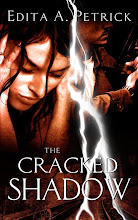
That's the billion-dollar question today in the e-publishing industry. There are a few superb editors out there who later on settled into writing. Nancy Mehl is one of them. She helped me edit my first published novel, "The Cracked Shadow." She was an editor and taught creative writing for 30 years before she settled into writing her own novels. She is a superb editor and a great writer. How many e-publishers today actually have STAFF editors who have editing experience (never mind credentials) and do nothing but editing?

NCP has just owners who write. In a sense, they're doing their writers a huge favor by NOT even attempting to do edits. And their readership certainly doesn't seem to mind so...? I think NCP will survive quite nicely and continue doing what they've been doing all along - producing novels for which there is an established readership out there that either doesn't care, desn't know better or doesn't notice lack of editing. There are other e-pubs that do little (typo-only) or no editing - I won't mention them but they're doing fairly well too with their established readership.

And then there are publishers, e-and-print, who actually have "Howitzer-size" editors - big-guns. These folks really know what editorial process entails, how to apply it and what constitutes editorial improvements - not to be confused with editorial whims, edit-by-numbers, and silly, petty indulgence. These folks will pick up story disconformities lickety-quick. They will ask one question that will very often lead to the author having to re-write most if not the entire storyline - if the author wants the novel to see the light of electronic debut. These are the folks who will not contract a poorly-structured, poorly-executed novel and will see this from reading the first 5 pages of the story - first 5 pages that are totally typo-free. These are the folks who will INSIST on changing one sentence and when the beleaguered author finally gives in, he/she will see that the change actually streamlines the story's flow - ENTIRE STORY'S FLOW at that.

These are the folks who know their facts, know their history, know their social or political taboos and are quick to censor any offense in a manuscript. These are the folks who have ONE preferred manual of style for placement of commas and will stick to it - author would be wise to just accept the comma placement with a blanket acquiescence.

These are the folks who have actually READ every single page, every single line of your manuscript and you as an author can readily see this - because Microsoft and Bill Gates gave us "track-changes" tool.

These are the folks who actually pick-up on your characters' motivations, no matter how subtle, and, depending on the action, timing or surrounding events, will question these and you as an author better have a logical answer.

These are the folks who give you 3 months to "answer" 750 questions enclosed in ''comment" balloons that arrive with your 1st edit.

These are the folks who give you an additional month to repair what they still see amiss in 350 questions that arrive with your 2nd edit.

These are the folks who generally edit for a living and to them editing is a job - not "that proofing thing they do to writing before we can put it up on our site for sale."

As an author, I've been in all three categories - good edits, poor edits and no edits. Did it hurt my sales? I don't think so. Not with any of the pubs where my works appear. However, I definitely prefer to work with an editor who knows his job, even if time and experience has shown me that those works that are with a publisher who has no editorial staff whatsoever, aren't going to suffer that much. It's actually quite an exciting experience to work with an editor who takes your story and its characters to task, every step of their actions and motivations. Such true editorial application makes you a better writer - it challenges not only your creativity and imagination, but your knowledge of writing craft.

As a reader...well, that's a different story. I've spent a lot more time on reading excerpts of those e-published authors whose print books I bought to see whether there's been improvement. It made me smile when I saw it...but it wasn't too often. I wonder whether we approach 'reading novels' differently as authors and readers? Or whether I'm just an oddball.


    Monday, February 18, 2008

    Targeting Your Reading Audience - Defining Your Genre

    Now that I have 5 books out there - counting the 2 that will soon be released by Cerridwen Press and NCP - I found it's very important to give accurate pointers and clues as to any given novel's genre. It seemed so easy and obvious when I wrote each book what it was that I was writing...until it came to that horrendous task of coming up with a 50-word pitch that would appear on a book's jacket. It's a mystery...well, yes but it also has romantic subplot, and it's a thriller-type of suspense, rather than just mere romantic suspense and yes, of course it has hot sexy parts but those are all part of the story which, at least for me, is why I write to begin with...how do you get all that across?

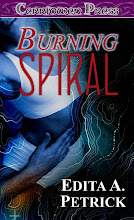
    Several years ago, when I had Helen McGrath Agency as literary agents, my agent Doris Johnson, told me that it was very difficult to sell cross-genre novels, regardless of their quality and "fresh" approach. I didn't understand what she was saying. I do now. It's very hard to correctly represent such a novel through the requisitve 50-word sales pitch that would woo the reader and - more important - that would not mis-represent the novel's slant and story. In "Burning Spiral" that's to come out soon from Cerridwen Press, my heroine is a detective who, together with her partner, is trying to solve a string of bizarre murders. The nature of the murders and clues borne by the victims pushes the novel into fantasy category. But there is a strong romantic subplot as well as professoinal power-plays and intrigues that she must deal with in her work environment. Many "how-to" sources advise to forget subplots when 'pitching' a novel and just deal with the main theme. But in this case, if main theme is taken, it would become a simple police mystery and that's nowhere close to what the story's about. I asked a writer-friend to write her version of the 'pitch' and she came up with something that sounded more like mainstream. That's when I realized that all one can do is give a brief blurb about the conflict the main character's facing and its consequences if not resolved.

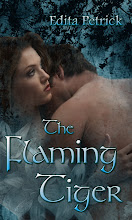
    My NCP novel, "Sweet Poisoned Wine" is a romantic suspense with sex scenes that do not happen behind closed doors, and yet NCP put it into a sweet romance category on their site. Other distributors gave it a 'sensual' rating. It made it that much more difficult to try and write a good commercial pitch for it - for my press releases. I'm curious to see what "The Flaming Tiger" will earn as rating because the sex in that romantic thriller is definitely several notches hotter (and darker) than the rest of my novels. Still, when I think of the novel, it's the suspense/thriller storyline that drives everything that happens in the heroine's life and sex - dark and desired - is a natural outcome.

    "Cold Scheme," which came out with ebooksonthe.net is perhaps my best-written and best in terms of suspense story to date that's out - so I was rather pleased when one reviewer called it a dangerous and disturbing story, precisely because that's what it's meant to be. So, whatever pitch I wrote for that one, is true to its roots.

    I found a good source for my inspiration for my book, "The Cracked Shadow" once it came on the Amazon.com becaue there you have the feature of the site 'pulling' for you other books just like yours - if you love reading this, you will enjoy reading this - and basically those other books defined the genre and category for me. Once I saw the slant of the pitches for those other books, it became much easier to write my own promoting pitch for "Shadow." Mind you, I find that a lot of those other pitches actually mis-represent the novel and often so badly that having bought it, I file it away half-read because it's nothing like its jacket-blurb promises. But the key words here are 'BOUGHT IT' which is all those jacket-blurbs want to achieve.

    So, it continues to be a dilemma with each promoting pitch I have to write - do I follow suite of those other commercial jacket-blurbs and hype the book's story and plotline, using sex as the ultimate selling tool, or do I stay close to the novel's "roots" and sweat over writing a 50-word pitch that gives a feel for the conflict and its consequences? I spend months walking with a story in my head precisely because for me, interest of writing lies in telling a story, rather than inserting requisite hot-sex scenes in for the sake of pitching it along those lines. And when I settle on an excerpt it's invariably one of the 'pivotal' conflict points in the story, rather than a segment that features a sex scene. Those, at least for me, are seldom 'pivotal'. They're more the type of culminating or platform scenes that change the direction of the story from then on, or more richly 'texture' the relationship that has been building up to that point. But they're NOT the story or its conflict resolution.

    One of my Night Owl Romance reviewers for "Burning Spiral" mentioned that she was pleasantly surprised by the wide-sweeping growth of the characters throughout the novel. It was something I never consiously thought about; rather it was all such a tightly-woven part of the story that to me it seemed transparent precisely because without such character growth, there would be little point to the story.

    I asked my writer-friends the ultimate question: Do you fill your pitch with all the commercially triggering words that feature these days in genre promotion, or do you try to pitch it along the lines of the story and its conflict? For a while it looked like I wouldn't get an answer - all the ruckus of discussion the topic raised - but one of them, obviously as exhausted by all the email noise as I was, said, "Give 'em a story and conflict...but make sure that somewhere in the middle of your 50-word pitch you include the word 'sex' -- three times. That ought to do it." And while I do see a commercial merit in 'overselling' my novels along those lines, I live in dread that one of these days I will get a letter from a reader who bought one of my books...and it won't be a nice fan letter either.